The State of Shopify: Headless vs Liquid (Spring 2026)
Headless vs Liquid is one of the most consequential architecture decisions a Shopify brand makes. It affects performance, team composition, integrations, editorial workflows, cost, and long-term maintainability. It's also one of the least well-understood. Most of the conversation has been reduced to slogans, or a thread on Twitter that makes one side sound obviously right. The reality is a tradeoff that looks different for every business, and it has more dimensions than most of the conversation accounts for. And it changes. Shopify ships new Liquid capabilities, Hydrogen matures, AI reshapes development velocity. The arguments stay the same but the facts underneath them don't.
Contents

Introduction
At Commerce-UI, we've built numerous headless Shopify stores for brands like Lady Gaga and Carhartt WIP North America and worked extensively with Liquid across dozens of projects. We have strong opinions on this topic, but we also know from experience that the right answer depends on the business, the team, and the moment. This assessment reflects that.
What follows covers ten dimensions — integrations, AI readiness, cost, editorial workflows, and six more. Each one gets an honest current-state verdict. The goal is to help you make the decision yourself, whether you're responsible for the ecommerce channel, approving the budget, or writing the code. I'll be updating this assessment periodically, because the right answer today won't necessarily be the right answer in a year.
UI/UX
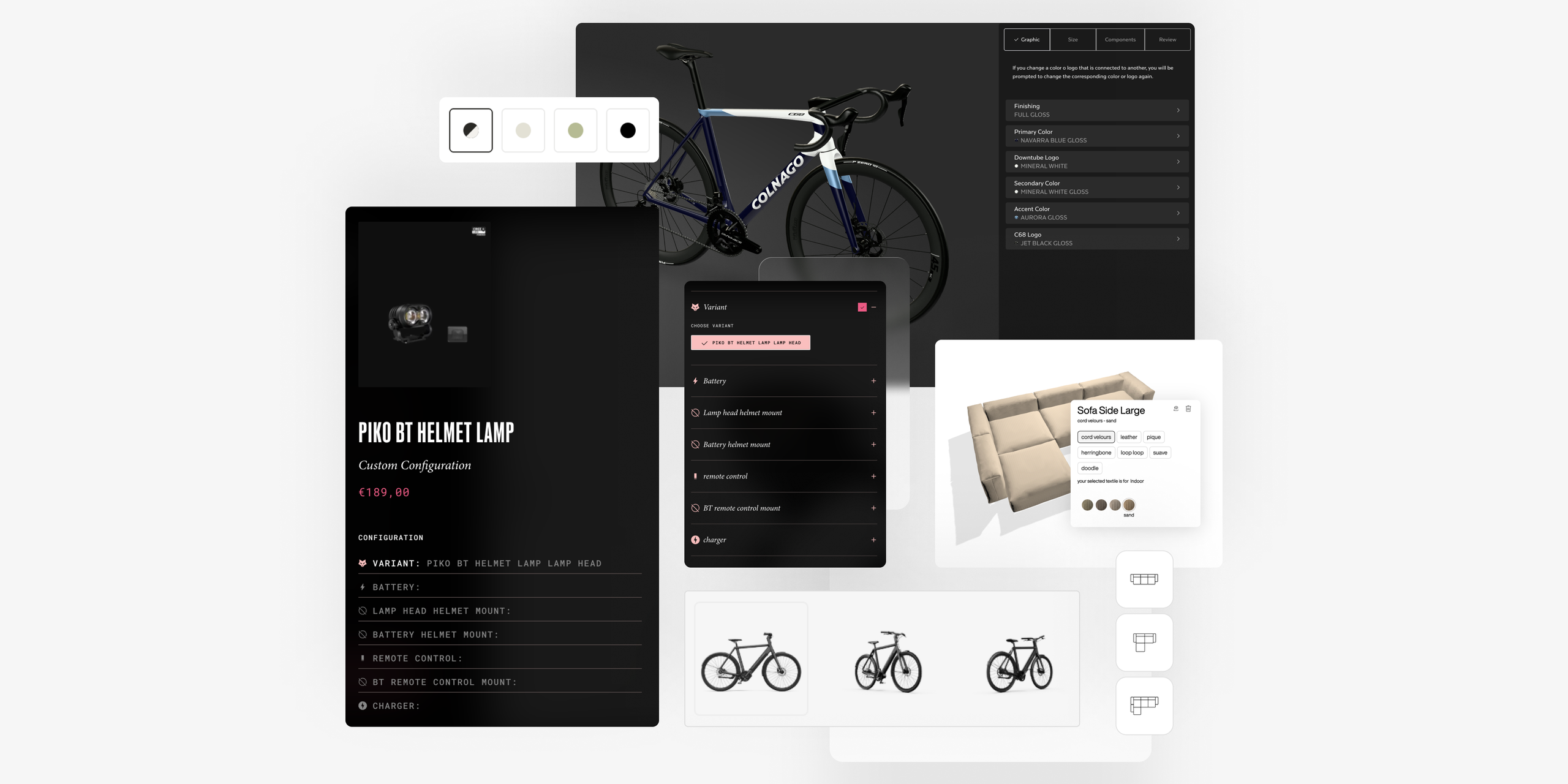
There's a persistent notion that Liquid-based stores have to look like templates — that if you want a genuinely custom, interactive experience, you need headless. That's not true. Liquid has no inherent UI/UX limitations. You can build complex storefronts on Liquid — product configurators, rich animations, custom shopping flows. We did exactly this with Lupine Lights, building a fully native Shopify product configurator without apps or external systems. If a headless site "could have been Liquid," that says more about Liquid's capabilities than most people realize.
Most storefronts are primarily presentational — product pages, collections, landing pages. Not much complex user interaction. For that, Liquid is more than capable. But if your specific case involves heavy interactivity — complex buying paths with interdependent UI widgets, real-time collaborative features — frameworks like React were built and popularized for exactly that reason. Building interaction-rich interfaces is faster and easier in React than in Liquid.
Current state call: Liquid has no meaningful UI/UX limitations for most stores. Headless has a practical edge when the experience involves unusually high interactivity.
Performance
The "headless is faster" narrative doesn't hold up as a general claim. Shopify's Liquid themes can perform well out of the box. Data shows roughly 60% of Liquid sites pass all Core Web Vitals, putting Shopify near the top of the CrUX Technology Report. Headless can be faster, but only when implemented well. A poorly built Hydrogen store will underperform an optimized Liquid theme. The framework doesn't guarantee performance. The engineering does.
Where headless has a real edge is control: fine-grained data fetching, streaming server-side rendering, and the ability to eliminate unnecessary third-party scripts that Liquid themes accumulate over time. But Shopify's CDN and infrastructure are deeply optimized for its own themes, so you get that optimization for free, no tuning required. This is closer to a draw than either camp admits.
Current state call: Liquid performs well by default with a higher floor. Headless has a higher ceiling, but reaching it requires deliberate engineering effort.
SEO
Liquid gives you solid SEO defaults out of the box. Canonical tags, structured data, meta tags — all handled by the theme. Shopify has been improving these defaults steadily, and the SEO community understands Shopify's URL patterns well. The tradeoff is rigidity: you're locked into /collections, /products, /pages. No custom URL structures, no programmatic page generation. For most stores, that's fine.
Where it's not fine is when SEO is a growth lever, not just a hygiene checklist. Headless gives you full control — custom URLs, dynamic meta tags, structured data tailored per page type, custom sitemaps, open-graph image generation. The big unlock is programmatic pages: pages generated automatically from data. Think city-specific landing pages built from a database of locations and inventory for example. These target long-tail queries at scale and can drive significant organic traffic. On headless, you can generate hundreds of pages from any data source. The caveat: you own every technical SEO detail. Canonical tags, hreflang, robots directives, none of it is handled for you. Getting headless SEO right requires dedicated effort, and getting it wrong actively hurts your rankings.
Current state call: Liquid covers SEO well for most stores. Headless is the better fit when SEO is a growth lever — particularly for programmatic content at scale.
Integrations: The Shopify App Ecosystem
The Shopify app ecosystem is built for Liquid. Most merchants run 10 to 30 apps — reviews, loyalty programs, upsells, subscriptions — and the majority install with a click, frontend widgets included. For marketing and operations teams, these aren't just tools. They're daily infrastructure. That plug-and-play integration is one of Liquid's strongest practical advantages.
Going headless doesn't mean losing app functionality entirely. Most apps still work on the backend: webhooks, admin integrations, data sync all carry over. What you lose is the frontend layer: theme blocks, customizer widgets, the drag-and-drop integration that non-technical teams rely on. Whether that gap matters depends on the specific app and the business case. For some apps it's a non-issue. For others — particularly those with customer-facing widgets like reviews or loyalty programs — it's a real gap that requires custom development to fill.
There's a counter-trend worth watching: merchants are increasingly questioning app dependency itself. App bloat (dozens of subscriptions, script overhead, overlapping functionality) is a real cost, both in money and performance. More teams are realizing that a lot of what apps do can be replaced with relatively straightforward custom development, especially as AI tools make that development faster and cheaper. If your strategy is already to reduce app reliance, the Liquid advantage in this dimension weakens.
Current state call: Liquid still has the edge for app-dependent teams, but the calculus is shifting as custom development becomes more accessible and app dependency becomes a liability of its own.
Integrations: Third Parties and Proprietary Systems
Apps are only part of the integration picture. There's a wider surface that matters: API-driven tools that need to be called and rendered on every page. Some live inside the Shopify ecosystem, like search, recommendations, and visual merchandising engines (Algolia, Rebuy, Tagalys). Others sit fully outside it: ERPs, PIMs, OMS platforms, custom pricing engines, proprietary fulfillment systems. What they share is that they're API-first, and they're usually business-critical.
Headless has a structural advantage here. You control the server. API calls to a merchandising engine, a CDP, or a proprietary pricing system can run server-side and ship inside the initial HTML. On Liquid, the same integrations usually get pushed to the client. The page loads, then JavaScript fetches and injects the results. For dynamic, above-the-fold content like search results or product recommendations, that costs you SEO and perceived performance.
Complex orchestration gets harder on Liquid too. Real-time inventory from a proprietary system, dynamic pricing from an external engine, personalized content from a CDP. You're limited to client-side fetches or Shopify's backend integration surfaces like metaobjects, Flow, and third-party connectors. You end up working around the platform instead of with it.
Current state call: Headless has a clear advantage when the integration landscape extends beyond Shopify apps. If your stack is mostly Shopify-native, this dimension matters less.
AI Readiness
This dimension barely existed a year ago. The AI space is in its infancy, shifting fast, with new tools and capabilities arriving constantly. That makes any assessment here a snapshot, but it's a snapshot worth taking.
At the platform level, both approaches benefit equally. Shopify is leading when it comes to AI — Sidekick, structured data improvements, Shopify Magic all work regardless of whether your storefront is Liquid or headless. New themes like Horizon already ship with AI features baked in. For merchants who want AI capabilities without custom development, Shopify is doing the work for you, and that's a real advantage for Liquid.
Where headless pulls ahead is bespoke AI. A lot of the most interesting AI tooling right now isn't packaged as a Shopify app. Custom agents, AI-powered search, personalization engines, content generation pipelines. Building anything beyond what Shopify offers natively requires API endpoints and control over the server environment. Headless already has that infrastructure. Headless also typically means a headless CMS like Sanity or Contentful, and these platforms are generally more open to integrating AI into editorial and content workflows than Shopify's native editor.
There's also a development velocity angle. AI coding tools today work better with React and TypeScript than with Liquid: the training datasets are larger, the model understanding is deeper, and the tooling ecosystem is more mature. This translates to faster iteration and lower cost per feature. But this advantage isn't permanent. AI models improve fast, Liquid is well-documented, and Shopify could ship better AI tooling for Liquid developers at any point. It's a current-state advantage, not a structural one.
Current state call: For most use cases, both approaches benefit equally from Shopify's platform-level AI work. Where headless pulls ahead is bespoke AI — custom agents, personalization engines, and integrations that don't come packaged as Shopify apps.
Internationalization and Multi-Market
Shopify's native multi-market support is genuinely strong. Markets, localized pricing, Geolocation, Translate & Adapt. This goes well beyond translation. You get regionalized content, market-specific product availability, and localized editorial, all manageable through the Shopify admin. For single-store, multi-market setups, Liquid handles internationalization well regardless of how many markets you run. The editorial experience Shopify gives you here is actually hard to replicate in a headless CMS.
Where headless shines is multi-store. When a brand operates multiple Shopify stores (different regions, different sub-brands, wholesale alongside DTC), content synchronization between stores becomes extremely painful. Headless enables a centralized content layer that serves all storefronts from one source of truth. Instead of duplicating and syncing content across stores, you manage it once. This is a real operational pain point we see frequently. Brands start with one store, expand to three or five, and suddenly spend more time keeping content in sync than creating it.

Current state call: Liquid paired with Shopify Markets handles single-store multi-market well. For multi-store setups where centralized content management matters, headless is the stronger choice.
Editorial Capabilities
Similar to performance, this is a ceiling vs floor story. Liquid has the higher floor. Headless has a much higher ceiling.
Liquid's floor is solid. Online Store 2.0 gives merchants a visual theme editor, sections everywhere, live preview, and metaobjects for custom content structures. For non-technical editors, the experience works well out of the box and keeps getting better. Shopify is also releasing admin extensions that make the admin more customizable. You get a good editorial workflow without building anything custom.
The headless ceiling is a different league, when done right. A headless CMS like Sanity or Contentful isn't just a content admin. With proper implementation, it becomes an operations hub. Completely custom editorial UI, role-based access control, custom publishing workflows, structured content models tailored to how your team actually thinks and works, down to naming conventions and language. The entire system can be shaped around the team rather than the other way around. The catch: CMS architecture is a real investment. Getting to that higher ceiling requires planning, implementation, and ongoing maintenance. There's also a learning curve. Teams familiar with Shopify's native editor need to learn an entirely new system. A poorly set up headless CMS is worse than Shopify's native editor, not better. Shopify's admin extensions are closing some of the customization gap, but they're still far from what a purpose-built headless CMS can deliver.
Current state call: Liquid gets you to a good editorial experience faster and with less effort. Headless reaches a higher ceiling — but only when the editorial complexity justifies investing in a fully custom CMS setup.
Operations and the Wider Ecosystem
Operations follows a similar ceiling vs floor pattern — and it's the dimension where the gap between the two approaches is most often misread.
Team composition depends on your setup. If you rely on agencies, it's easier to find one with a proven track record in Liquid. But if you have your own development team, they're more likely accustomed to general-purpose frameworks like React — which is what headless runs on. It's not just dev agencies, either. Performance marketing agencies, SEO agencies, and CRO consultants are also more accustomed to working with Liquid storefronts.
On deployment and DevOps, headless has actually pulled ahead. Platforms like Oxygen (Shopify native Hydrogen hosting) and Vercel have made headless deployment straightforward. But it goes beyond hosting. Development workflows — CI/CD pipelines, preview deployments, feature flags, build hooks for notifications — are where headless is significantly further ahead than Liquid. You can build manageable dev environments and workflows on Liquid too, but it requires effort and expertise to get there.
Where headless surprises people is the operational ceiling. Yes, you lose access to some built-in Shopify features and app functionality. But you gain an environment better suited for custom automations, a headless CMS shaped to your team's workflows, and direct access to external data. For teams with complex operations — ones that depend on data from wider company resources, third parties, or proprietary systems — headless can actually simplify things. Instead of integrating external data into Shopify's backend through automations or semi-manual processes, the storefront can directly fetch, transform, and render it.
Current state call: Liquid has the higher floor — easier to staff, easier to find agency support, simpler out of the box. Headless has the higher ceiling, with better dev workflows, stronger automation capabilities, and a real operational advantage for teams whose data and integration needs extend beyond Shopify's native tooling.
Cost and TCO
The default assumption is that headless is always the more expensive option. It doesn't have to be. The idea that headless equals a big budget is outdated, and it's one of the most damaging misconceptions in this conversation. Performance and UI/UX aren't the main reasons to go headless. TCO should be.

The initial build cost gap is smaller than people think. Across our recent project evaluations, when we compare Liquid vs headless for the storefront initial scope, the difference sits at around 20% in initial budget — not 3-5x. The horror stories about enormous headless budgets usually trace back to the agency ecosystem not being accustomed to headless yet. The cost came from inexperience, not from the technology itself. Hydrogen and Oxygen have also changed the economics. Hydrogen standardizes headless Shopify development — less custom plumbing, more shared patterns, lower cost to build. Oxygen is included hosting with no additional pricing. Together, they've removed a significant chunk of the cost that used to make headless prohibitive. Development commoditization is closing the gap further. AI tooling and the maturing ecosystem mean custom solutions cost less than they did two years ago. This disproportionately benefits headless, where more of the work is custom.
Ongoing maintenance costs are higher on headless. That's worth stating plainly. You own more of the stack, which means more to maintain: framework upgrades, CMS updates, hosting configuration, custom integrations that need upkeep. On Liquid, Shopify handles much of this for you. The maintenance gap is real and should be part of any honest cost comparison.
Where headless can still reduce TCO is in complex operations. Multiple data sources, proprietary systems, custom workflows. Headless simplifies flows that would otherwise require custom infrastructure bolted onto Shopify's backend. The Hydrogen/Oxygen stack already covers many of these cases. Instead of paying for middleware, sync tools, and workarounds, you build it into the storefront layer. Liquid's hidden costs are real too: app bloat, recurring subscriptions, theme customization debt, and the cost of building custom infrastructure when you need solutions beyond what Shopify offers natively. These add up over time and never appear in upfront budget comparisons.
For standard operations and storefronts — straightforward catalog, standard buying flow — Liquid's economics are hard to beat. Integrations that only require installing an app are significantly cheaper on Liquid, though they still need customization if you want a tailored experience. Liquid also keeps everything on one platform. One vendor, one bill, one permissions model. No separate CMS to license, no extra seats to provision, no extra SSO wiring. That's a real operational cost on headless, and it shows up in the TCO ledger even when nobody thinks to count it. But whether headless lowers or raises your TCO comes down to business analysis, not framework comparison. The real evaluation work is in mapping your business processes against both architectures and seeing which one creates less friction and lower cost over two to three years.
Current state call: For standard storefronts, Liquid is the more economical choice. For complex operations, headless can lower TCO, but proving that requires honest business analysis, not technology assumptions. The evaluation work belongs in mapping your actual processes against both architectures.
The Scorecard
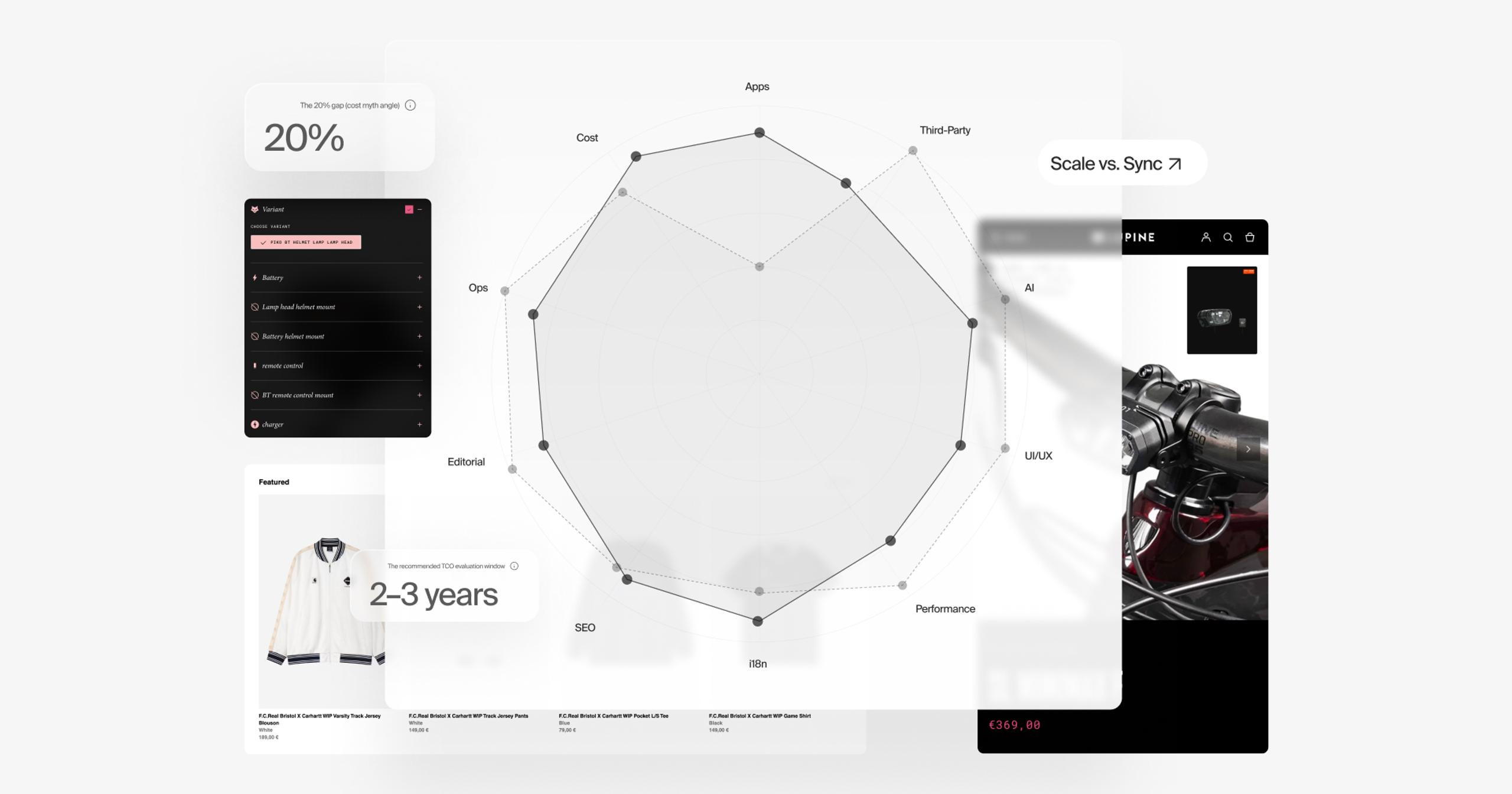
Ten dimensions, summarized. The weight you give each one depends on your business. A brand with complex integrations and an in-house dev team will read this scorecard very differently than a DTC brand running 25 apps with an agency on retainer. That's the point.

What Comes Next
Everything above reflects where things stand in Spring 2026. It will change. Shopify will ship new Liquid capabilities. Hydrogen's ecosystem will mature. AI tooling will get better at both frameworks. The editorial gap may close. Third-party apps may finally get headless right.
I'll revisit each dimension in a future edition and track which way things moved. If you're evaluating this decision for your own business — or you've already made it and have data to share — I'd like to hear about it. This assessment is meant to start a conversation, not end one.